 ×
×
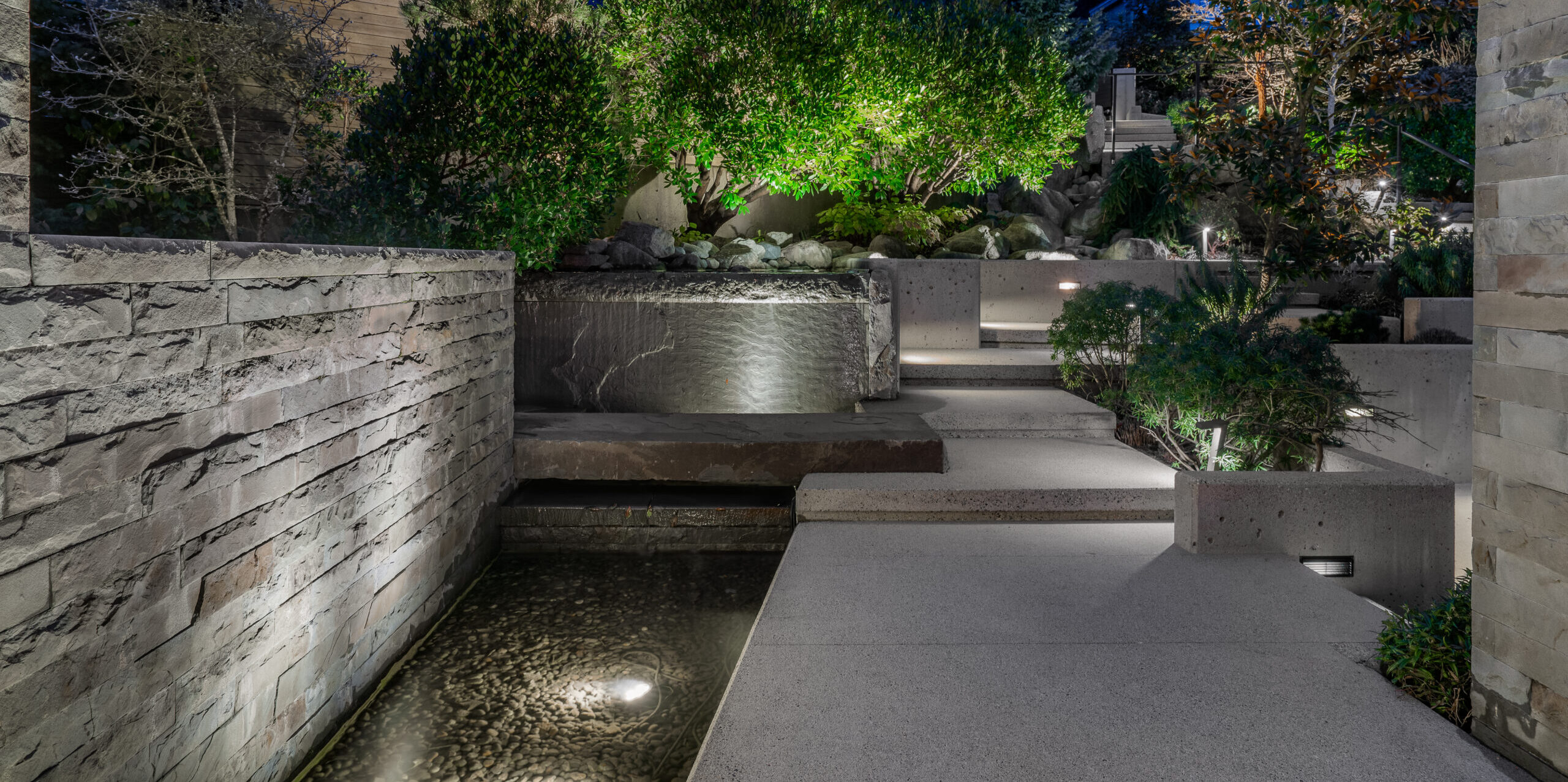
Water shapes a property in ways no other element can. The sound of a stream against a still afternoon. The way an early-morning reflecting pool holds the sky. A koi pond rippling under cedar shadow. In the Pacific Northwest, where rain is part of the daily texture and water is woven into the landscape, a thoughtful water feature reads less as decoration and more as a continuation of the place itself.
Garret Cord Werner approaches water features as architectural and ecological design moves rather than landscape add-ons. Reflecting pools, ponds, fountains, and integrated streams are developed alongside the architecture, the planting plan, and the hardscape so the water sits in dialogue with the rest of the home rather than as an isolated feature.
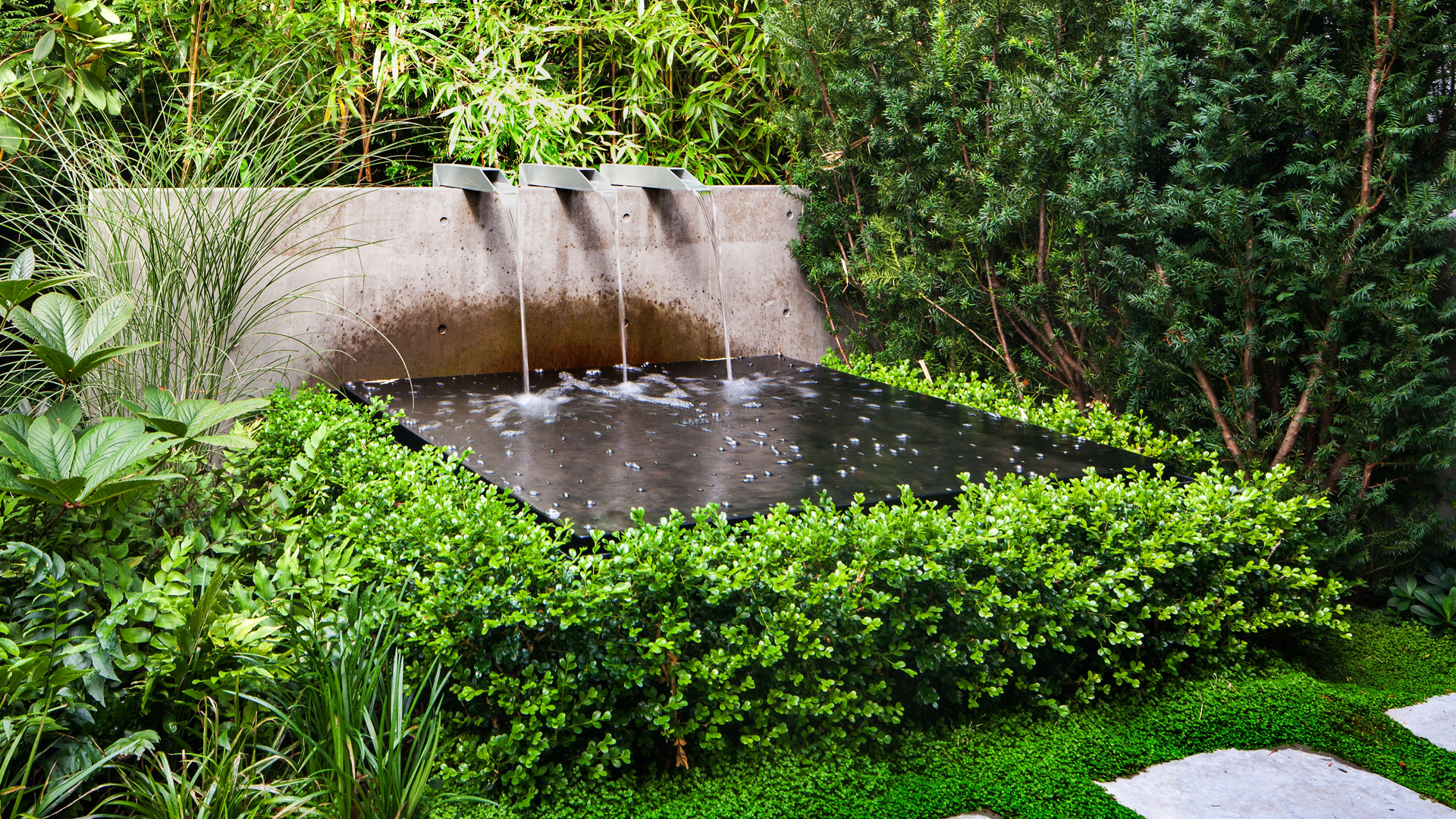
A water feature designed as an object placed on a property reads that way. A water feature designed as part of the architecture, the landscape, and the way the household experiences the home becomes something else entirely. The reflecting pool that frames the entry. The stream that defines a sightline from the kitchen window. The pond that becomes the focal point of a private garden. These are atmospheric decisions, not decorative ones, and they ask for the same care as any other architectural element.
Pacific Northwest climate and culture also shape what works. Many of our water features are influenced by Japanese garden tradition, where water carries spiritual and meditative weight rather than ornamental presence. Sound, reflection, movement, and stillness are all considered with the same rigor as proportion and material. Done well, the water feature becomes one of the quietest and most meaningful elements on the property.
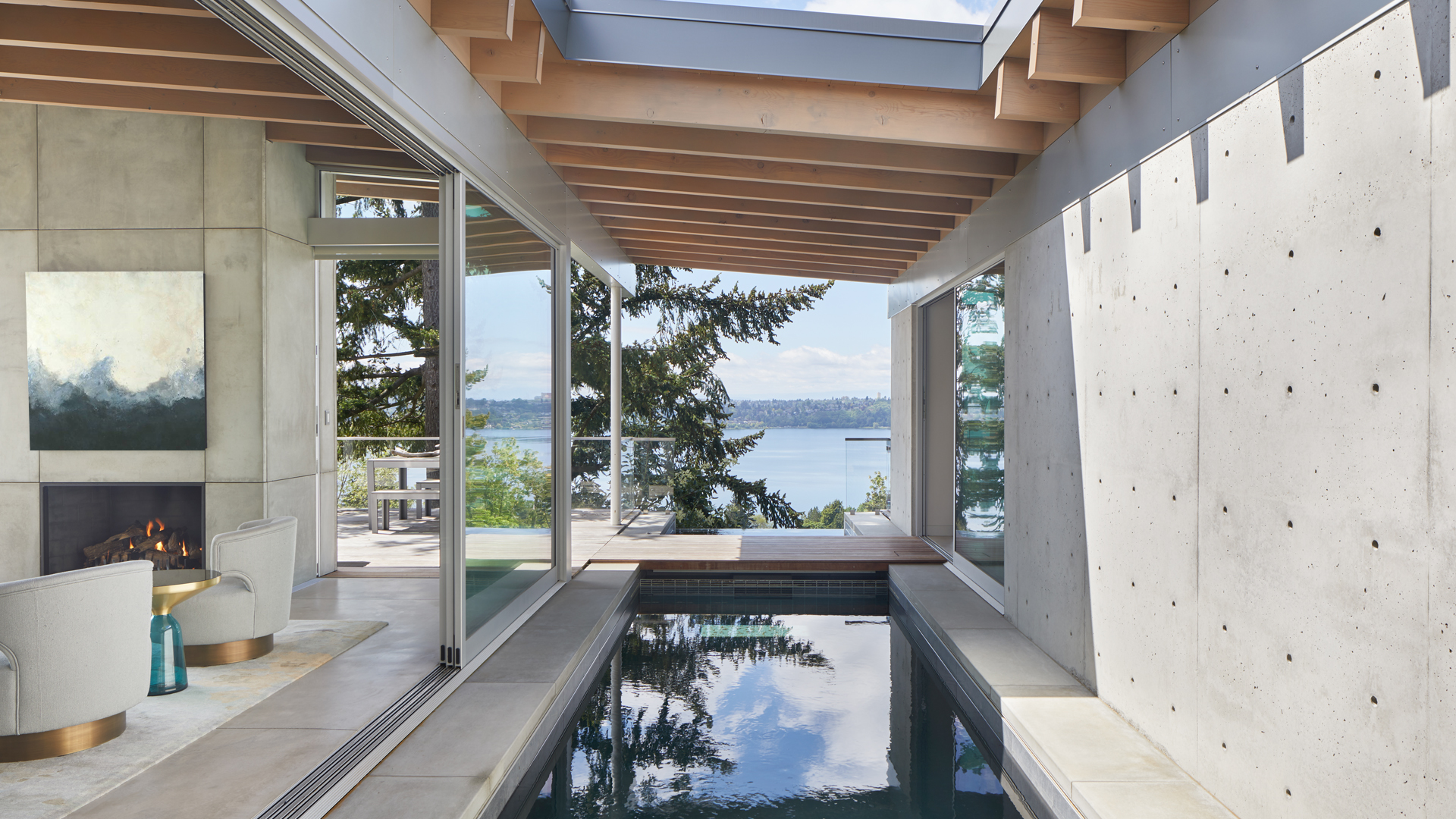
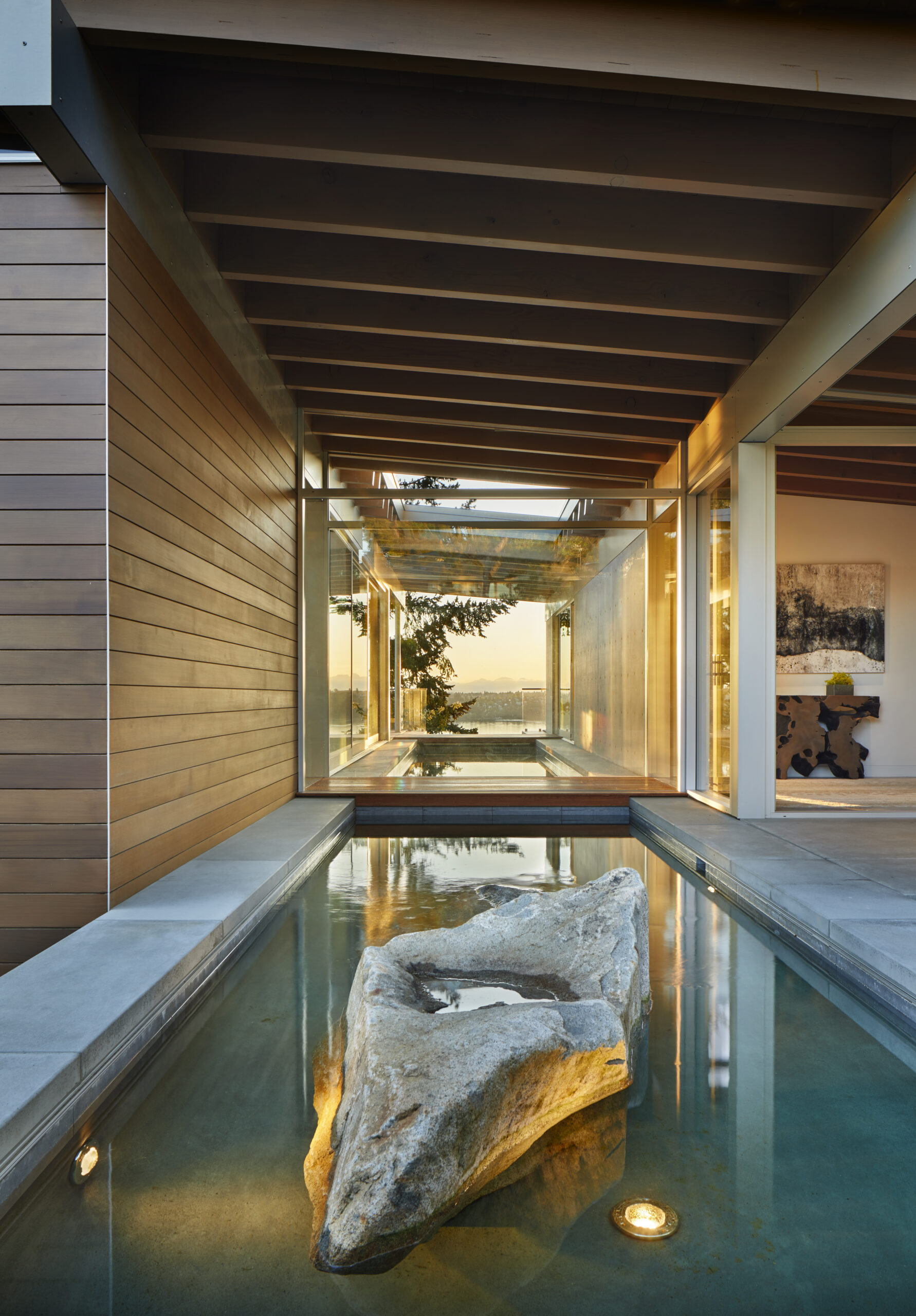
Reflecting pools are some of the most architecturally expressive water features. A still surface placed thoughtfully against the building doubles the sky, frames the architecture, and brings light into the home in unexpected ways. Edges, depths, coping details, and the relationship to surrounding hardscape all factor into a reflecting pool that performs as designed rather than as a generic pond shape filled with water.
A working pond, particularly one supporting koi or other fish, is an ecosystem rather than a basin of water. Filtration, aeration, depth zones for thermal stability, plant integration, and predator considerations all shape the design. Where the household wants a koi pond, we develop the engineering alongside the landscape design so the pond performs over decades rather than a few summers.
Moving water introduces sound and rhythm to a property. A small recirculating stream along an entry path, a cascade flowing into a pond, or a quiet rill threaded through a garden each carry different acoustic and visual qualities. We design for the specific sound and movement the household responds to, calibrated to the surrounding architecture and the privacy of the site.
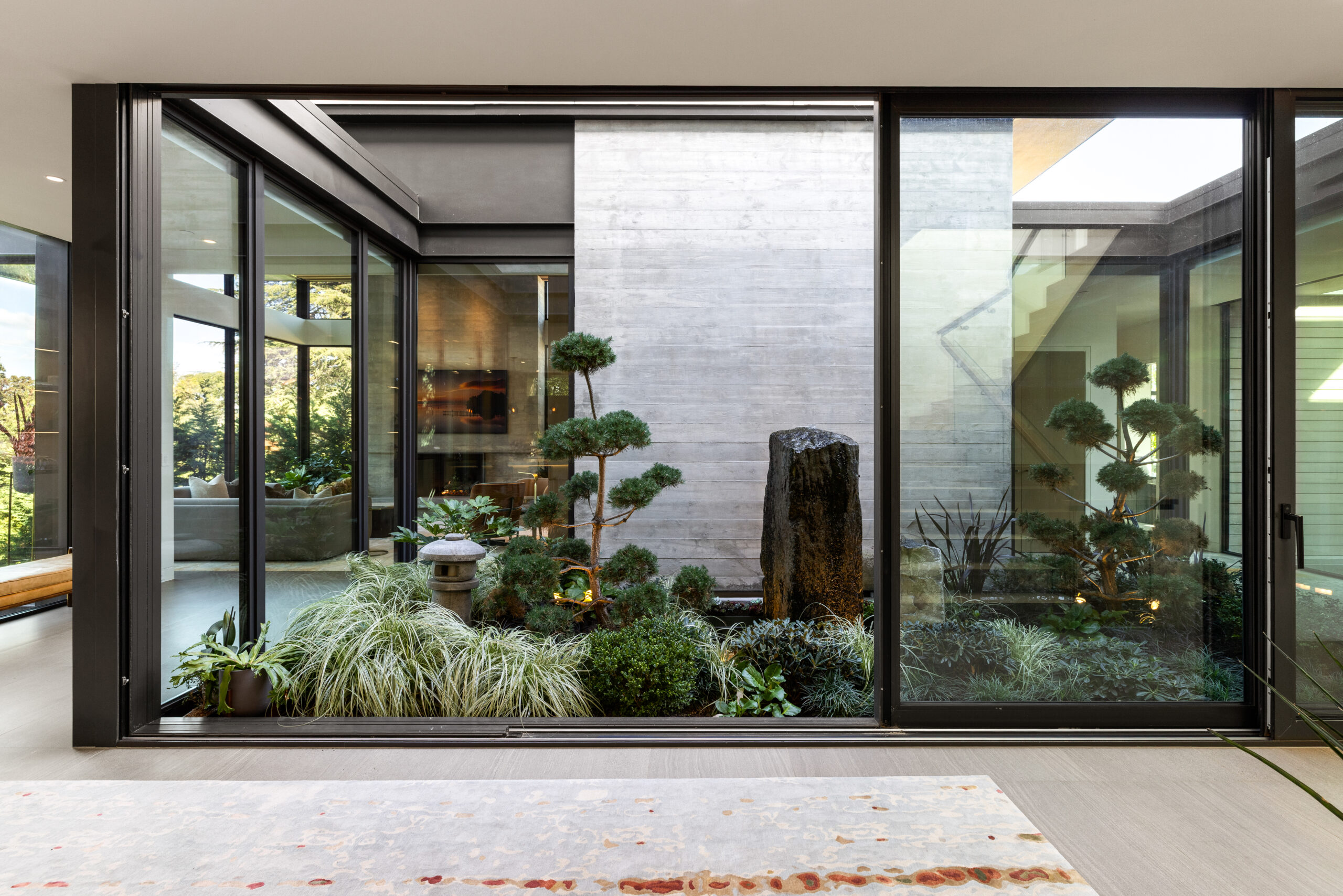
Fountains range from minimal architectural elements, a single jet emerging from a basalt monolith, to more sculptural compositions integrated with hardscape. We treat fountains as material objects designed for the specific space rather than selected from a catalog. Where the design supports it, the fountain becomes one of the property’s anchor moments.
Water features fail when the engineering is treated as an afterthought. Liner selection, pump sizing, plumbing routing, freeze protection, drainage, and access for maintenance all decide whether the feature will perform over decades or struggle within a few seasons. We coordinate these decisions with the design team and qualified specialists from early planning so the water feature is built to last.
It depends on the feature. A simple recirculating fountain requires modest upkeep. A working pond with fish and plantings requires more regular attention, particularly seasonally. A reflecting pool falls between the two depending on its size and detailing. We discuss maintenance honestly during early planning so you understand the commitment the feature will require over years.
Yes. Some of the most rewarding water features work at modest scale: a single basalt fountain near an entry, a small reflecting basin against a wall, a recirculating rill along a short path. The right water feature for a property is calibrated to the architecture and the site rather than to maximum size.
From early design. Reflecting pools and ponds placed against the building affect foundation detailing, drainage, and structural decisions. Fountains visible from interior rooms shape window placement and sightlines. We develop the water feature alongside the architecture rather than after it so the integration reads as intentional.
Pacific Northwest winters generally support year-round operation of properly designed water features, with some seasonal adjustments. Pumps, plumbing, and exposed elements are selected and detailed for freeze tolerance. For features that benefit from winter shutdown, we plan for the seasonal cycle so it is straightforward rather than disruptive.
We coordinate the design and work closely with qualified water feature specialists, structural engineers, and landscape contractors who can execute the engineering at the level the design asks for. Most of our water features are developed within an integrated team rather than handed off to a separate trade after the design is finished.
Garret Cord Werner is a full-service architecture and interior design firm founded in 1996, with deep roots in Pacific Northwest construction and a long history of integrating architecture, interiors, and landscape into a single vision. Our studio designs and produces custom furnishings, lighting, and hand-woven rugs to complete each home with continuity from envelope to interior.
If you are planning a new home, a remodel, or a landscape project where water is part of the conversation, we would welcome a chance to discuss it.


