 ×
×
March 23, 2026
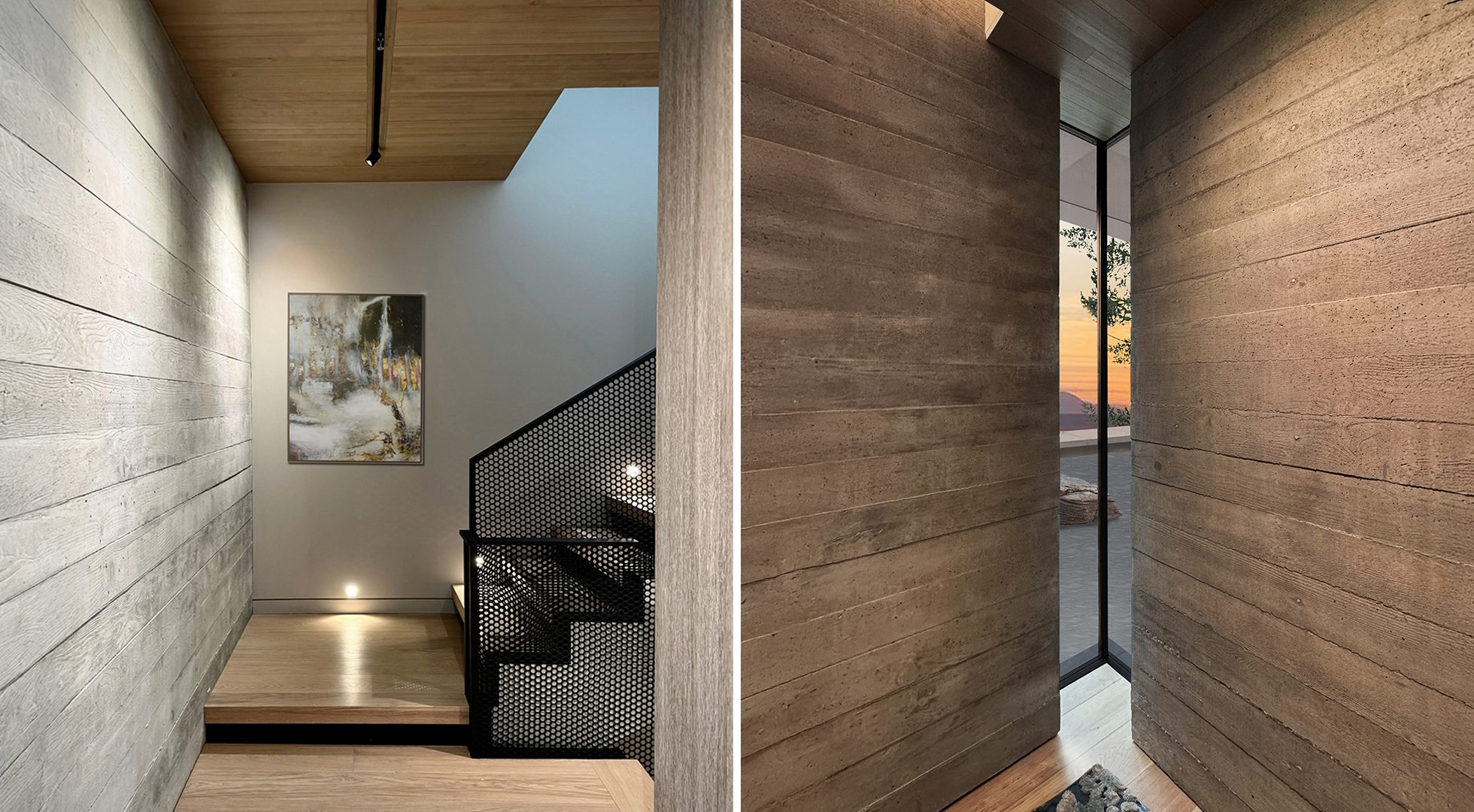
There is a moment in every well-designed home where something specific catches the eye and holds it. A staircase that curves with quiet authority. A fireplace surround carved from a single slab of stone. A window framed so precisely that the view beyond it feels composed, almost painted. These are not decorative additions applied after the fact. They are custom architectural details, conceived alongside the structure itself, and they are often what separates a house that functions well from one that genuinely moves the people who live in it.
Custom architectural details carry a significance that extends beyond appearance. They are where form meets function in custom features, where the builder’s skill becomes visible, and where the character of a home is quietly defined. In residential architecture, these details are also among the most enduring investments a homeowner can make. They age with the house, develop patina, and become part of its identity over decades. When they are designed with care and executed with precision, they make every room feel considered and whole.
What Makes an Architectural Detail Truly Custom
The word “custom” is used broadly in residential design, and it can mean very different things depending on context. A semi-custom cabinet with a non-standard paint color is not the same as a staircase whose geometry was developed in tandem with the structural engineer, detailed in construction documents down to the radius of the handrail, and fabricated by a metalworker who collaborated with the design team through multiple prototypes.
Truly custom architectural details begin in the earliest phases of design. During programming and schematic work, the architect identifies moments in the home where a bespoke element can elevate the spatial experience, solve a functional problem, or connect the interior to something larger: a view, a material narrative, a client’s daily ritual. These details are then developed through design development and construction documentation, where dimensions, materials, joinery methods, and finish specifications are resolved with the same rigor applied to the building’s structural and mechanical systems.
The distinction matters because it determines the outcome. A detail that is designed as part of the architecture reads as inevitable. It belongs. A detail that is selected from a catalog and applied later, however skillfully, often reads as separate from the space around it. In our work, custom details are not afterthoughts. They are integral to the design from the beginning, developed in tandem with the architecture, interiors, and landscape so that every element reinforces the same vision.
Statement Staircases
Few architectural elements carry as much spatial and emotional weight as a staircase. It is one of the only features in a home that simultaneously occupies multiple floors, shapes circulation, and creates a vertical experience of light and volume. A statement staircase is not simply a staircase with expensive materials. It is one where the geometry, structure, materiality, and relationship to surrounding spaces have been designed as a unified architectural gesture.
Consider the range of decisions involved. The rise and run of each tread determine the rhythm of ascent. The width of the stair affects whether it feels generous or compressed. An open-riser design allows light to pass through, connecting floors visually and making a two-story entry feel taller. A solid-riser staircase with a thick stone tread conveys mass and permanence. The handrail profile, whether a warm bronze channel rail or a sculpted solid wood form, becomes one of the most touched surfaces in the home.
In projects where the staircase occupies a central position, its design often influences the surrounding architecture. A cantilevered steel stringer can become a sculptural spine visible from the living room, the entry, and the upper hallway simultaneously. A helical stair in a double-height foyer draws the eye upward and establishes the home’s sense of scale from the moment of arrival. These are not decorative flourishes. They are expressions of craftsmanship that require close collaboration between architect, structural engineer, and fabricator to achieve both beauty and structural integrity.
Signature Fireplaces
A fireplace has always been more than a heat source. In residential architecture, it is a gathering point, a focal wall, and an opportunity to express material character at a scale that commands attention without overwhelming. A signature fireplace is one where the surround, the hearth, the proportions, and the integration with the wall plane have been designed to anchor a room.
The material palette for a custom fireplace is wide and consequential. A floor-to-ceiling surround in honed basalt or blackened steel creates a monolithic presence that grounds the entire living space. A fireplace framed by hand-applied limewash plaster, with a recessed firebox and no visible mantel, achieves a quiet, almost meditative quality. A hearth raised slightly off the floor plane, with a thick stone cap that extends to become a bench, offers both visual weight and a practical surface for sitting.
What elevates a fireplace from standard to signature is the level of integration. The surround does not end at the mantel. It connects to adjacent built-in shelving, or continues as a material datum line that wraps a corner and carries into the next room. The firebox opening is proportioned to the wall, to the ceiling height, and to the furniture arrangement in front of it. The flue chase is concealed within the wall assembly so that the exterior expression is clean. These relationships are resolved in the construction documents, detailed at full scale, and coordinated with the mechanical engineer to ensure proper venting and clearances. The result is a fireplace that feels as though it grew from the wall itself.
Bespoke Windows and Doors
Windows and doors are the primary interfaces between a home and its surroundings. They control light, frame views, manage privacy, and define the rhythm of a facade. When these elements are custom designed, they become some of the most powerful architectural details in the home.
A bespoke window is not simply a larger or more expensive version of a standard unit. It is a window whose dimensions, mullion pattern, glass specification, and frame profile were determined by the specific conditions of the room it serves. A tall, narrow window on a west-facing wall might use low-iron glass to preserve the warmth of afternoon light while a deep reveal creates a play of shadow along the adjacent plaster. A corner window that eliminates the structural column at the junction of two glass walls dissolves the boundary between interior and landscape, requiring careful structural coordination but producing a result no standard window can achieve.
Doors carry similar potential. A pivoting entry door in solid timber, scaled to the full height of the opening, announces arrival with quiet authority. Pocket doors that disappear entirely into the wall, allowing a living room to open fully to a covered terrace, transform the spatial experience of the home on demand. Custom sliding barn-style doors in blackened steel and glass can separate a study from a hallway while maintaining visual connection and light flow.
The detailing of these elements matters enormously. The weatherstripping, the threshold transition from interior flooring to exterior paving, the hardware, and the frame profiles all contribute to how the window or door performs and how it reads within the architecture. When indoor-outdoor living is a design priority, bespoke windows and doors are often the details that make the difference between a home that gestures toward its landscape and one that genuinely embraces it.
Integrated Art Features
Art in a well-designed home is not hung on a wall as an afterthought. It is integrated into the architecture as a spatial element, planned during the design phase and supported by lighting, proportions, and material backdrops that allow each piece to be experienced fully.
Integrated art features take many forms. A recessed niche in a plaster wall, precisely dimensioned for a specific sculpture and lit by a concealed fixture above, becomes a moment of stillness in a long hallway. A gallery wall with a picture rail system and dedicated lighting circuit allows a collection to evolve over time without patching and repainting. A commissioned glass installation in a stairwell transforms a transitional space into something extraordinary, catching and scattering light as you move past it.
The architectural response to art also includes structural and environmental considerations. A large-scale painting requires a wall with sufficient depth to conceal blocking for secure mounting. Sensitive works on paper require UV-filtering glass in nearby windows and climate control that maintains stable humidity. A sculpture garden visible from the living room requires landscape design that provides an appropriate setting and lighting that works after dark.
In our practice, art consulting and curation are woven into the interiors process from the early stages. We work with galleries and artists to select or commission pieces that complement the architecture, and we design the spaces around them so that the relationship between art and room feels deliberate rather than incidental.
Personalized Spatial Elements
Beyond the major architectural moments, custom homes are defined by a constellation of smaller, personalized spatial elements that reflect how the specific inhabitants actually live. These are the details that a production home cannot offer and that a catalog cannot supply.
A built-in reading nook beneath a window, with a cushioned seat at the exact depth for reclining and shelves within arm’s reach, is a detail that costs relatively little to build but transforms a hallway into a destination. A mudroom with cubbies dimensioned for each family member’s gear, a bench at the right height, and a concealed dog wash station with a hand-held sprayer solves daily problems with architectural precision. A home office with a custom desk built into millwork that wraps the room, incorporating concealed cable management and adjustable task lighting, makes remote work feel supported rather than improvised.
Wine storage, media rooms, outdoor kitchens, custom pantries with pull-out shelving, shower niches aligned to tile coursing: each of these details begins as a conversation about how the client wants to feel in a particular space. Architects who detail these elements during construction documentation produce homes where the specificity of the design becomes its greatest source of lasting satisfaction.
The discipline of personalized spatial elements also extends to accessibility and aging in place. Wider doorways, curbless showers, blocking for future grab bars, and elevator shafts roughed in during construction are details that are invisible when the home is new but invaluable as needs change over the years. Planning for these during design costs a fraction of retrofitting later.
The Role of Craft and Collaboration
Custom architectural details depend on skilled hands. The architect draws the detail, but the artisan builds it. This relationship, when it works well, produces results that neither party could achieve alone. The architect understands proportion, context, and how the detail fits within the larger composition. The craftsperson understands the material: its grain, its tolerances, its behavior under the tool. The best details emerge from a dialogue between these two kinds of knowledge.
In high-end residential work, this collaboration often involves prototyping. A custom stair rail is mocked up at full scale in the shop before fabrication begins, allowing the architect and client to evaluate its profile in hand. A fireplace surround is assembled dry in the stone yard so that veining and color variation can be reviewed before installation. A single well-resolved architectural detail can elevate an entire room, but only when the design intent is clearly communicated and the execution matches the ambition.
The global bespoke furniture market alone has grown to approximately thirty-five billion dollars, reflecting a broader shift among homeowners toward one-of-a-kind craftsmanship over mass-produced alternatives. This demand for personalization extends naturally into the architectural fabric of the home itself. Custom lighting fixtures designed for a specific ceiling height and room proportion. Hand-woven rugs scaled and colored to complement a particular stone floor. Furniture conceived alongside the architecture so that the scale, material, and character of each piece reinforce the space it inhabits. When these elements are developed by the same design team responsible for the architecture and interiors, the coherence of the result is unmistakable.
Why Details Endure
Trends in residential design come and go. Open floor plans give way to more defined rooms. Cool palettes yield to warmer tones. Hardware finishes cycle through brass, nickel, black, and back again. But custom architectural details, when they are well conceived and well made, endure through all of it. A solid wood staircase with hand-shaped treads does not go out of style. A stone fireplace surround does not need to be replaced when tastes shift. A thoughtfully proportioned window continues to frame the same view, in the same beautiful way, for as long as the house stands.
This longevity is both aesthetic and financial. Homes distinguished by thoughtful architectural detailing and material integrity consistently hold stronger market appeal and command greater respect from buyers who understand the difference between surface-level decoration and genuine design quality. More importantly, they reward their owners every day with spaces that feel specific, resolved, and genuinely theirs.
The details are where the vision becomes tangible. They are where the architect’s intention, the craftsperson’s skill, and the client’s daily life converge. In every project we undertake, these moments receive the same care as the largest spatial decisions, because it is often the smallest, most precisely resolved detail that a homeowner remembers and loves most.
Creating Custom Details with an Integrated Design Team
Garret Cord Werner is a full-service architecture and interior design studio that has been developing custom residential projects since 1996. The firm designs architecture, interiors, and landscape as a single unified vision, which means every custom detail, from a statement staircase to a bespoke window to an integrated art installation, is conceived as part of the whole rather than added as a layer. In addition to comprehensive design services, the firm produces custom furnishings, lighting, hand-woven rugs, and curated art that extend the architectural language into every finished element of the home.
If you are planning a custom home, a renovation, or a project where the details truly matter, we would welcome the opportunity to discuss what your home could become. Start a conversation with our team.


