 ×
×
March 12, 2026
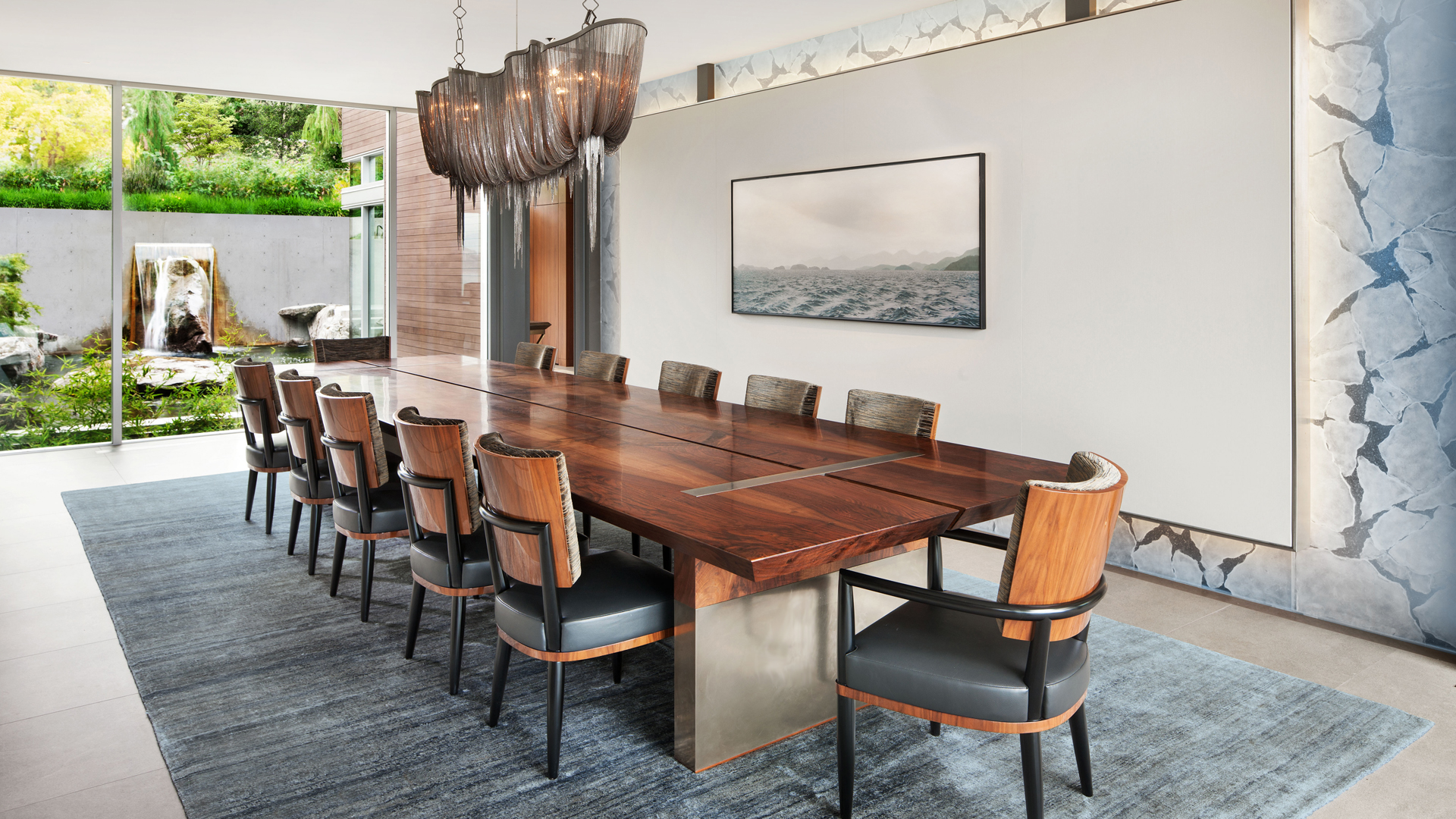
Run your hand along a wall finished in hand-applied limewash plaster. The surface is not flat. It holds the trace of the trowel, a subtle undulation that catches morning light differently than afternoon light, differently again by lamplight in the evening. This is the quality that distinguishes artisanal materials and finishes from their manufactured equivalents. They carry evidence of the human hand, respond to the conditions of the space, and develop character over time rather than simply wearing down.
In residential architecture, the choice of materials and finishes shapes how a home feels as much as how it looks. A honed stone floor underfoot is cool, grounding, and quiet. A hand-woven textile on a chair is warm, textured, and inviting. Reclaimed wood on a ceiling carries the grain and patina of its previous life. These are not decorative choices layered onto a finished structure. When they are selected and specified during the design phase, artisanal materials and finishes become integral to the architecture itself, carrying the same intention as the spatial planning, the light, and the landscape beyond the glass.
What Makes a Material Artisanal
The word “artisanal” describes materials and finishes that are made by hand, produced in small quantities, or crafted using techniques that require specialized skill and time. These are not commodities pulled from a warehouse. They are the product of a kiln, a loom, a quarry, a workshop. Handmade tiles with slight variations in glaze and dimension. Plaster mixed and applied by a plasterer who understands how humidity, temperature, and trowel pressure affect the final surface. Stone selected slab by slab for its veining, color, and the way it responds to a honed or leathered finish.
What sets artisanal materials apart from standard alternatives is their relationship to process. Each piece carries the mark of how it was made. That mark is not a defect. It is the source of the material’s richness and the reason it holds interest over years rather than fading into visual neutrality. In a home where the selection of materials is treated as a design discipline rather than a purchasing exercise, these qualities become part of the home’s identity.
The Story Behind Materials
Every artisanal material carries a narrative. A slab of reclaimed Douglas fir from a decommissioned Pacific Northwest timber structure brings with it a century of weathering, a density of grain that new-growth timber cannot match, and a connection to the region’s history. A hand-thrown ceramic basin from a local potter reflects the proportions of the artisan’s hands and the specific clay body of the region. A hand-woven rug dyed with natural pigments tells a story about the weaver, the sheep, and the landscape where the wool was shorn.
These stories are not sentimental additions. They are material facts that inform the character and longevity of the finished home. When clients and their design team select materials with this kind of intentionality, the result is a residence that feels specific to its place and its inhabitants rather than interchangeable with any other home at a similar price point. The global handmade and artisanal products market has grown to approximately nine hundred billion dollars, reflecting a broad cultural shift toward authenticity, provenance, and the kind of quality that mass production cannot replicate.
Handmade Tiles and Textiles
1. Tile as a Craft Medium
Handmade tiles introduce a quality of surface that factory-produced tiles cannot approach. Zellige tiles from Morocco, with their irregular edges and hand-dipped glaze, create walls that shimmer and shift with the light. Encaustic cement tiles, poured and pressed by hand, offer geometric patterns with a matte, chalky depth that feels ancient and contemporary at once. Hand-glazed ceramic tiles from small-batch producers carry tonal variation from piece to piece, so a wall or backsplash reads as a living surface rather than a uniform plane.
The specification of handmade tile requires coordination between the architect, the tile maker, and the installer. Dimensions may vary slightly from tile to tile, which means grout lines, layout patterns, and trim details need to account for this variability. The reward is a surface with a depth and warmth that no printed or mechanically glazed tile can achieve. In kitchens and bathrooms, where tile often covers large areas, this craftsmanship in finishes becomes one of the most visible and tactile expressions of the home’s character.
2. Textiles as Architecture
In a well-designed home, textiles are not accessories. They are architectural elements that contribute to acoustics, thermal comfort, and the sensory experience of each room. A hand-woven wool rug absorbs sound and softens the interaction between foot and stone floor. Linen curtains in a natural flax tone filter light with a quality that synthetic fabrics cannot match, creating a diffused glow that changes with the time of day.
Custom textiles conceived alongside the architecture take this further. A rug designed for a specific room, with its dimensions, pile height, and color matched to the stone floor and plaster walls around it, becomes part of the spatial composition. Hand-woven carpets produced with custom-dyed materials can carry the tonal palette of the entire home in a single surface. When these pieces are developed by the same team responsible for the architecture and interiors, the coherence between the woven element and the built environment is unmistakable.
Reclaimed Wood and Stone
1. The Character of Reclaimed Wood
Reclaimed wood brings a material history into the home that new lumber simply cannot offer. Old-growth timber salvaged from barns, warehouses, bridges, and industrial structures carries a tighter grain, greater density, and a weathered surface that decades of use have refined. Wide planks of reclaimed white oak or heart pine, carefully milled and refinished, provide a floor or ceiling with depth, color variation, and a sense of permanence that reads as both warm and grounded.
Using reclaimed wood also carries a sustainability benefit that aligns naturally with sustainable approaches to luxury home design. Salvaging existing timber reduces demand for new harvesting, diverts material from landfills, and preserves the embodied energy of the original tree. In projects where the material palette emphasizes honesty and longevity, reclaimed wood anchors the design with an authenticity that even the finest new lumber cannot fully replicate.
2. Natural Stone at the Artisanal Scale
Stone is among the oldest building materials, and its artisanal use in residential design involves far more than selecting a slab from a distributor’s yard. It begins with understanding the geological character of the stone: its mineral composition, veining pattern, color range, and how it responds to different finishing techniques. A honed limestone floor has a matte, almost chalky warmth that absorbs light. A leathered granite countertop reveals texture and depth that polished granite conceals. A basalt fireplace surround, split-face on one side and honed on the other, creates a dialogue between rough and refined within a single element.
The selection process for artisanal stone often involves visiting the quarry or fabrication yard to review slabs in person, evaluating how the veining of one piece will flow into the next across a long countertop or a full-height fireplace wall. This level of care is part of the design-build process that distinguishes custom residential work from production building. When the architect and client select stone together, understanding how it will read in the actual light conditions of the room, the result is a material choice that feels resolved rather than approximate.
Craftsmanship in Finishes
1. Plaster and Lime-Based Finishes
Hand-applied plaster is experiencing a quiet resurgence in high-end residential design, and for good reason. Limewash, Venetian plaster, tadelakt, and clay-based finishes create walls that breathe, respond to moisture, and shift in appearance with the quality of light. Unlike paint applied to drywall, which produces a uniform, opaque surface, artisanal plaster finishes have depth. They pull the eye in rather than sitting flatly on the wall’s face.
Tadelakt, a waterproof lime plaster with origins in Moroccan architecture, is particularly well suited to bathrooms and wet areas where a seamless, grout-free surface is desirable. Its polished, slightly waxy finish resists water while maintaining the warmth and tactile quality of a hand-worked surface. Clay plasters offer breathability and low-VOC performance, contributing to healthier indoor air quality. Each of these finishes requires a skilled applicator, and the final surface is as much a product of the craftsperson’s technique as the material itself.
2. Metal, Glass, and Mixed-Media Finishes
Artisanal metalwork adds another layer of craft to residential interiors. Hand-forged bronze hardware develops a living patina over years of use. Blackened steel, applied as wall cladding or cabinetry accents, introduces an industrial warmth that pairs well with natural wood and stone. Nickel-plated steel, used for custom table legs or light fixture armatures, offers a precision and sheen that cast or stamped alternatives lack.
Art glass represents one of the most expressive artisanal finishes available. Fused, slumped, or blown glass can serve as wall panels, pendant light diffusers, room dividers, or integrated architectural features. When a glass artist collaborates with the design team, the resulting piece responds to the specific proportions, light conditions, and color palette of the room it inhabits. In projects where the design team details these elements during construction documentation, the integration between the artisanal piece and its architectural context is seamless.
Rich Textures in Design
Texture is the quality that makes artisanal materials reward proximity. From a distance, a room finished in natural materials may appear restrained, even minimal. Up close, it reveals extraordinary complexity. The grain of rift-sawn oak running in parallel lines across a floor. The subtle stipple of a hand-brushed bronze surface. The irregular crazing of a raku-fired ceramic vessel. The nubby weave of a hand-loomed linen on a dining chair.
Rich textures in design serve a purpose beyond aesthetics. They engage the sense of touch, which is one of the most powerful ways a home creates comfort and belonging. A smooth, cool stone threshold gives way to a warm wood floor. A rough plaster wall meets a silk-smooth lacquered cabinet. These transitions create a sensory rhythm as you move through the home, registering at a level below conscious thought but profoundly shaping how the space feels to inhabit. When architecture and interiors are developed together, these textural transitions can be planned and calibrated so that each material meeting reads as intentional rather than accidental.
Old-World Craft Meets Modern Style
One of the most compelling qualities of artisanal materials is their ability to bridge eras. Techniques that are centuries old, from Japanese shou sugi ban wood charring to Moroccan zellige tile making to Italian Venetian plaster application, produce surfaces that feel entirely at home in contemporary architecture. The materials are ancient. The application is modern. The combination creates interiors with a depth of reference and a visual warmth that purely contemporary finishes often lack.
This is where old-world craft meets modern style in a way that transcends either category. A clean-lined, open-plan kitchen with slab cabinetry and minimal hardware gains enormous character from a backsplash of hand-glazed tiles with irregular edges and tonal variation. A contemporary bathroom with frameless glass and floating vanity becomes grounded and sensory when the walls are finished in tadelakt and the floor in honed travertine. A modern fireplace surround in board-formed concrete, with the wood grain of the formwork imprinted in the surface, connects industrial precision to the handmade quality of the mold itself.
The key to achieving this balance is specification-level thinking during the design and documentation phases. When an architect understands both the technical requirements of an artisanal material and the aesthetic result it can produce, the finished home reads as a unified composition rather than a collection of interesting surfaces.
How Artisanal Materials Age
Perhaps the most important distinction between artisanal and manufactured finishes is how they change over time. A synthetic surface deteriorates. An artisanal surface evolves. Bronze darkens and develops patina. Limestone softens slightly at high-traffic thresholds, creating a gentle wear pattern that records the life of the home. Leather upholstery develops a grain and suppleness that improves with each year of use. Wood floors deepen in tone as light and air interact with the oil finish.
This aging is not a liability. It is the material’s way of belonging to the home more fully over time. Homes built with artisanal materials and finishes tend to hold their beauty and their value because the materials themselves were chosen for longevity, not trend. They do not need to be replaced when tastes shift because their quality transcends any particular style. A well-selected limestone floor or a hand-woven rug does not go out of fashion. It simply becomes more itself.
Specifying Artisanal Materials with an Integrated Design Team
Garret Cord Werner is a full-service architecture and interior design studio that has been developing custom residential projects since 1996. The firm designs architecture, interiors, and landscape as a single unified vision, which means every material selection, from a hand-applied plaster finish to a custom hand-woven rug, is conceived as part of the whole. The founder grew up trained in construction by his family’s development and building businesses, bringing a rare depth of hands-on material knowledge to every specification.
In addition to comprehensive design services, the firm collaborates closely with artisans to produce custom furnishings, lighting, and hand-woven carpets that extend the architectural language into every finished detail. Over the years, these long-standing relationships with specialized craftspeople have become central to how the firm works, ensuring that the artisanal materials in each home are not sourced as afterthoughts but developed as integral extensions of the design.
If you are planning a home where the materials truly matter, we would welcome the opportunity to explore what your project could become.


