 ×
×
March 20, 2026
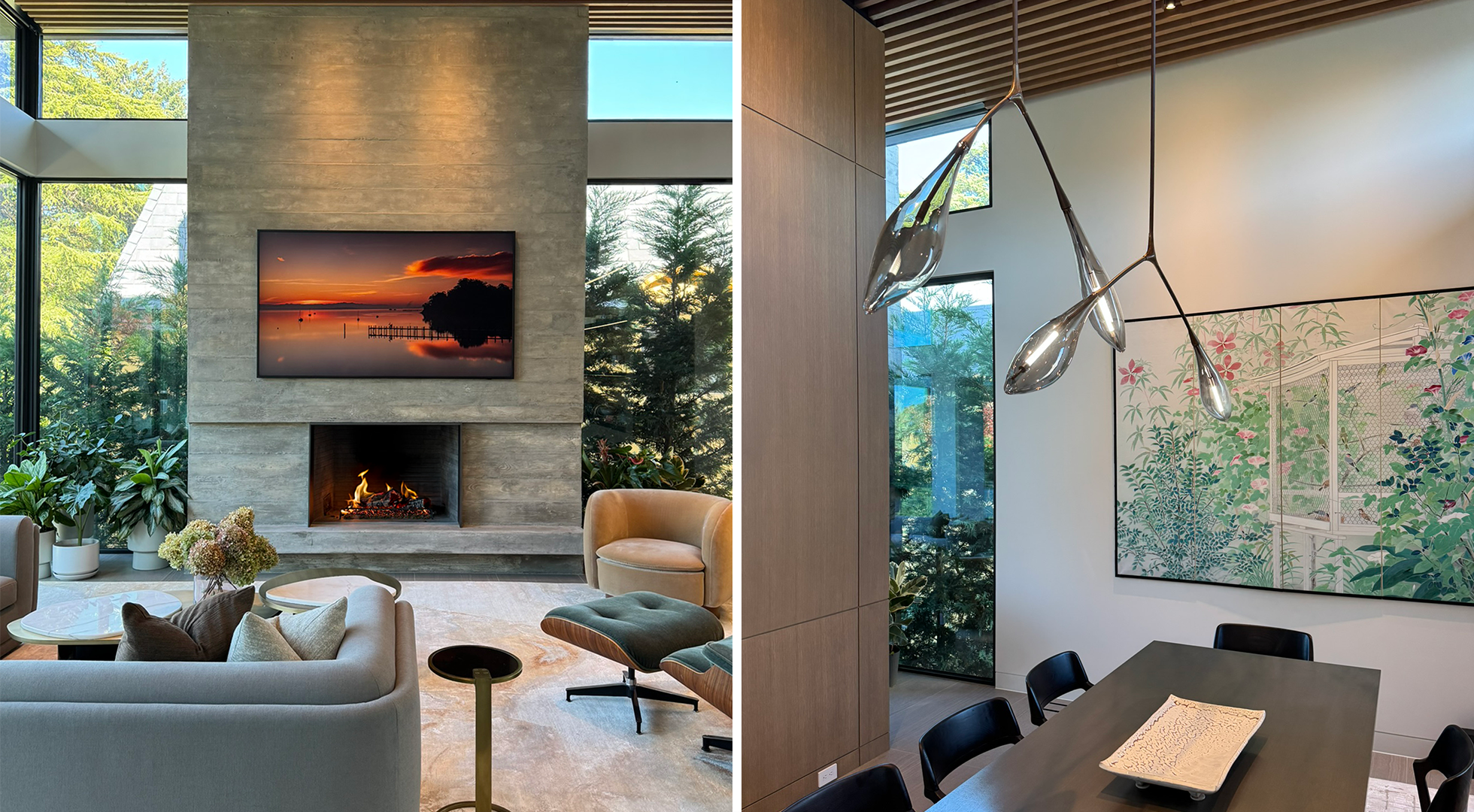
When Every Element Is Made for the Room It Inhabits
A custom home becomes truly personal not through its square footage or its address, but through the elements that were conceived for no other place. Bespoke interior design elements are the furnishings, fixtures, surfaces, and details that originate from the specific conditions of a project, shaped by the architecture, the light, the landscape, and the way a household actually lives. They cannot be pulled from a catalog because they did not exist before the design called for them.
This distinction matters more than most homeowners realize at the outset. Off-the-shelf furnishings are designed to work adequately in many rooms. Bespoke elements are designed to work perfectly in one. The difference accumulates across an entire residence until the home feels less like a collection of purchased objects and more like a single, coherent environment where architecture and interior merge without seams.
Custom Furniture and Fixtures
Custom furniture and fixtures begin with a spatial problem that standard products cannot solve. A dining table sized precisely for a room’s proportions and the number of people who gather there. A console designed to the exact depth of an entry alcove, its material and finish drawn from the same palette as the surrounding millwork. A bed frame whose headboard height relates to the window sill behind it, so daylight enters the room without glare and the proportions feel resolved.
When furniture is designed alongside the architecture, it participates in the spatial composition rather than merely occupying it. A built-in bench in a reading nook can align its seat height with an adjacent window ledge, creating a continuous horizontal line that calms the eye and makes the corner feel intentional. A kitchen island can be shaped to the room’s geometry, its countertop edge profiled to match the level of craft detailing found elsewhere in the home.
Fixtures follow the same logic. Lighting, in particular, benefits from a bespoke approach. A pendant designed for a specific ceiling height and table position distributes light where it is needed rather than where a manufacturer guessed it might be. Wall sconces scaled to a hallway’s width and ceiling height create rhythm and warmth that generic fixtures, however attractive in isolation, rarely achieve. The global market for bespoke furnishings reflects this growing preference, with custom furniture projected to reach roughly fifty-eight billion dollars by 2031 as homeowners increasingly seek pieces made for their own spaces rather than for showroom floors.
Tailored Cabinetry and Millwork
Cabinetry and millwork are where architecture and craft meet most directly. They define the character of kitchens, bathrooms, libraries, mudrooms, and dressing areas. When tailored to a project, they do far more than store objects. They shape the way a room reads, the way light reflects off surfaces, and the way a hand encounters the home at close range.
Tailored cabinetry and millwork allow dimensions to respond to actual use. A pantry can be fitted with shelves spaced to the heights of the items that will live there. A bathroom vanity can be built to the exact counter height that suits its owner, with drawer widths sized to specific grooming tools rather than generic compartments. A library wall can incorporate adjustable shelving, integrated lighting, and a concealed media cabinet within a single unified composition, so the room feels like a room rather than a furniture showroom.
Material selection is equally important. Solid hardwood panels, hand-applied lacquer, honed stone inlays, or metal edge banding are decisions that connect cabinetry to the broader material language of the home. When these choices are made as part of an integrated design approach that develops architecture and interiors together, the millwork reads as part of the building rather than as an addition to it. Grain direction, joint profiles, and finish sheen can all be coordinated with adjacent wall treatments and flooring, so transitions between surfaces feel continuous and calm.
One-of-a-Kind Decor Pieces
Beyond furniture and millwork, a custom home benefits from one-of-a-kind decor pieces that carry meaning, provenance, or craft that no reproduction can offer. These might be a hand-blown glass vessel commissioned for a specific mantel, a textile woven to the exact dimensions and color field of a wall it will hang against, or a sculptural object discovered on a client’s travels and given a purpose within the design.
One-of-a-kind decor pieces function differently than decorative accessories selected from retail. They anchor a room’s identity. A hand-woven rug designed in collaboration with artisan weavers, its palette drawn from the home’s interior color story and its scale calibrated to the seating arrangement above it, becomes the foundation of a living room rather than an afterthought. A commissioned painting or a curated grouping of ceramics placed within a purpose-built niche gives that niche a reason to exist, so architecture and art reinforce each other.
The key is intentionality. Each piece should have a relationship to the space it inhabits, whether through color, material, scale, or personal narrative. When decor is selected and placed with the same rigor applied to structural decisions, the home achieves a quality that distinguishes bespoke environments from even the most expensively furnished interiors.
Client Personal Touches and the Design Process
Bespoke interior design elements for custom homes gain their deepest resonance when they reflect the people who live there. Client personal touches are not superficial styling decisions added at the end of a project. They are woven into the design from the earliest conversations, when an architect and interior designer learn how a family cooks, reads, entertains, rests, and moves through their day.
A client who collects prints may need a gallery wall with specific lighting angles and hanging systems integrated into the wall structure. A family of musicians may require a listening room with acoustic treatments that are architecturally embedded rather than retrofitted. A couple who values morning coffee together might shape an entire kitchen orientation around the east light and a view of the garden, with a custom window seat and built-in tray table designed for that single daily ritual.
These personal touches emerge through a disciplined design process that includes programming, schematic design, and close collaboration between client, architect, interior designer, and builder. When that process begins early and remains integrated throughout, personal elements are not ornaments applied to a finished shell. They are structural, spatial, and material decisions that give the home its unique character from the inside out.
Collaboration with Artisans
Many of the most distinctive bespoke elements in a custom home come from direct collaboration with artisans, the skilled craftspeople who work in glass, metal, wood, stone, and textile to produce objects that cannot be manufactured at scale. This collaboration with artisans is not a luxury add-on. It is a method of achieving detail, fit, and material integrity that factory production cannot match.
A metalsmith can forge custom hardware with a surface texture that complements the home’s stone selections. A glass artist can create a fused panel for a room divider whose color and translucency respond to the quality of light on a particular facade. A cabinetmaker can prototype a drawer pull in three profiles before the final selection is made, ensuring the tactile experience is as considered as the visual one. These are not indulgences. They are decisions that produce unique character in details, the kind of specificity that makes a home feel authored rather than assembled.
Long-standing relationships with specialized craftspeople enable a design firm to push the boundaries of what can be achieved within a project’s scope and budget. When artisans understand the design language of a firm and the expectations of its clients, prototyping is faster, communication is clearer, and the finished product arrives with the precision that high-end residential work demands. This is particularly true for elements like bespoke lighting, hand-woven carpets, and custom furnishings that require both design direction and fabrication expertise to achieve their full potential.
Unique Character in Details and the Cumulative Effect
No single bespoke element makes a home extraordinary on its own. The power lies in accumulation. When custom furniture, tailored millwork, one-of-a-kind decor, client-driven personal touches, and artisan-crafted details all operate within a unified design vision, the home achieves a coherence that cannot be replicated by even the most generous decorating budget applied after the fact.
This is the essential argument for developing architecture and interiors in tandem rather than in sequence. A floor plan conceived without knowledge of the furniture that will inhabit it may produce rooms that are the wrong proportion for their intended use. A lighting layout designed without reference to art placement may leave the most important objects in shadow. A millwork package specified independently of the cabinetry hardware may produce a home with two competing visual languages instead of one.
When bespoke interior design elements are integrated from the start, each decision informs and strengthens the next. The ceiling height accommodates the pendant. The niche dimensions anticipate the sculpture. The rug palette draws from the stone floor it borders. The result is a home where every detail feels as though it was always meant to be there, because in truth, it was.
This cumulative quality also protects value over time. Homes filled with considered, well-crafted bespoke elements tend to age with grace. Materials develop patina rather than showing wear. Proportions that were grounded in principle remain satisfying decades later. The finished work reflects the depth of collaboration between everyone involved, from first sketch through final installation.
Begin with a conversation about how you want to live
Every bespoke home starts with listening. If you are planning a new residence or reimagining an existing one and want architecture, interiors, and landscape developed as a single vision, tell us about your project and we can outline the first steps together.
This content is for general informational purposes and does not constitute professional advice. Project conditions, regulations, and outcomes vary. For guidance specific to your home or site, please contact our team.


