 ×
×
March 25, 2026
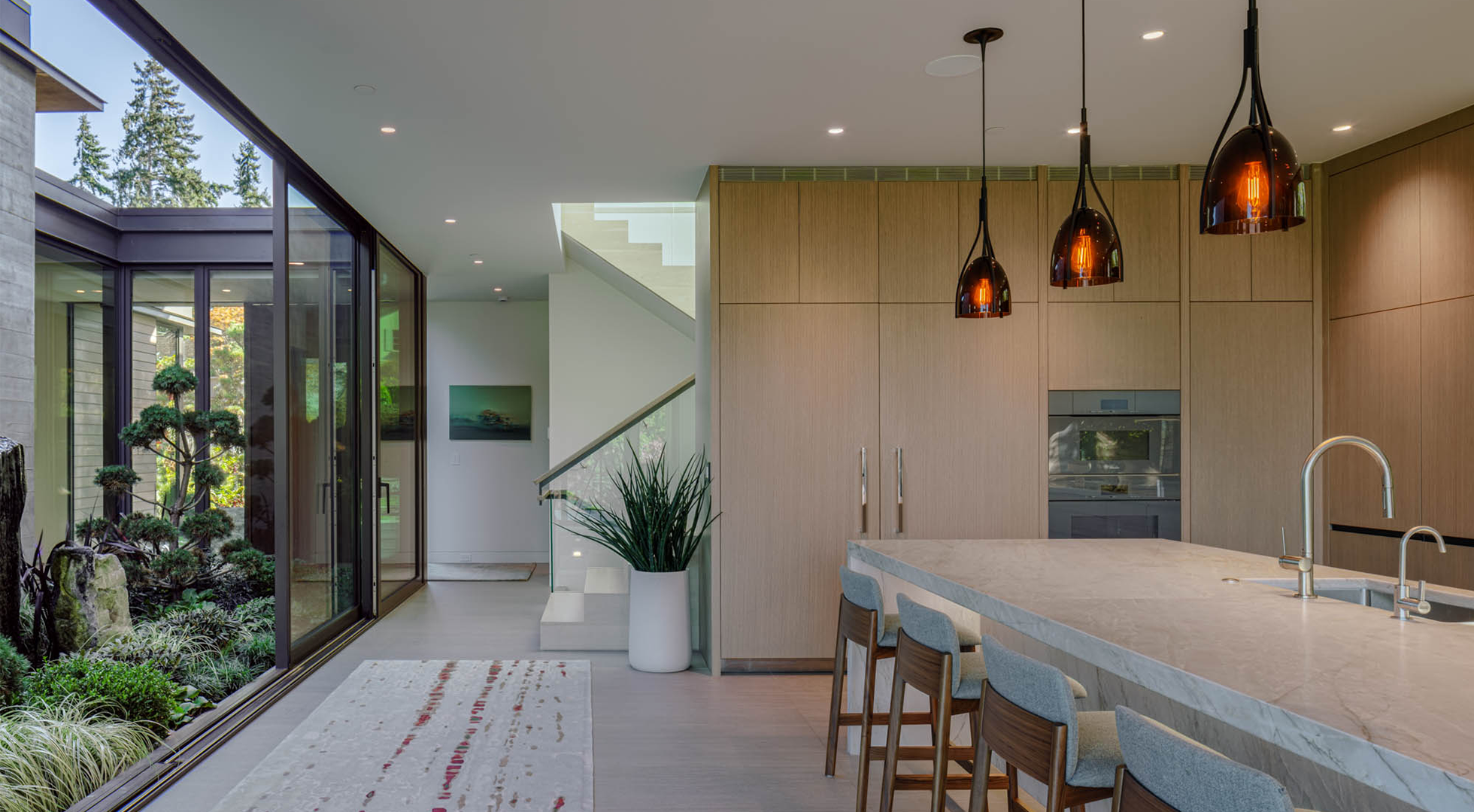
A room can look composed in a photograph and still feel flat when you walk through it. The difference is often touch. Tactile interior design treats the sense of touch as a primary design tool, shaping how surfaces, textiles, and architectural finishes meet the hand, the bare foot, and the body at rest. In custom residential work, where every detail is drawn from scratch, this sensory dimension is not decorative afterthought but structural intention, woven into the material palette from the earliest schematic conversations.
When architecture, interiors, and landscape are developed together, texture becomes a thread that connects each threshold. A honed stone floor that begins in the entry and continues onto a sheltered terrace. A cedar ceiling plane that draws the eye from kitchen to covered deck. A hand-woven rug that anchors a seating arrangement while softening the acoustics of a double-height volume. These are not isolated finish choices. They are design moves that shape the lived experience of a home, room by room, surface by surface.
Why Touch Matters in Residential Design
Vision dominates the way most people evaluate interiors, but touch governs comfort. The grain of a dining table under the forearm during a long meal. The cool weight of a stone countertop beneath the palms at dawn. The give of a thick wool runner underfoot on a cold morning. These micro-interactions accumulate into something larger: a feeling of belonging, of ease, of a home that knows its inhabitants.
Research in environmental psychology consistently supports what experienced designers have long observed. Spaces rich in varied, natural textures tend to reduce stress and promote a sense of well-being, while flat, uniform surfaces can feel institutional regardless of how carefully they are styled. For homeowners investing in a holistic design approach, the tactile quality of every surface becomes a meaningful part of the conversation, not a line item buried at the end of a specification package.
The global market for bespoke furnishings, valued at roughly $35 billion and growing steadily, reflects this shift. Affluent homeowners are moving away from mass-produced finishes and toward handcrafted, touch-forward materials that reward close contact and age gracefully over decades of daily use.
Texture and Fabric Selection as an Architectural Decision
In tactile interior design for custom homes, fabric and texture selection begins long before a designer opens a swatch book. It starts with questions about how a family lives. Where do they gather? How do they move between rooms? Do they prefer the cool clarity of stone and glass, or the warmth of wood and woven textiles? The answers shape a material palette that is as intentional as the floor plan itself.
Effective texture and fabric selection requires balancing three considerations: sensory quality, visual harmony, and long-term performance. A linen slipcover might be the right choice for a casual family room where children and dogs cycle through, offering softness that improves with washing and a relaxed drape that invites sitting. In a more formal living area, a structured mohair or a brushed suede might carry the design, providing depth and warmth without competing with the architecture.
The best results come when the interior designer works in tandem with the architect, coordinating upholstery textures with wall finishes, ceiling materials, and floor surfaces so that no single element feels disconnected. In the Lakefront Condo project, for instance, materials were chosen to be slightly rustic, warm, and tactile, with a sophisticated application. Bronze was used as base and casing throughout, and soft tones paired with sumptuous surfaces to create a peaceful, grounding atmosphere. The effect was not of separate finish selections but of one continuous sensory experience.
Warm Wood and Cool Stone: The Foundation of Tactile Contrast
The interplay of warm wood and cool stone is one of the most enduring principles in tactile interior design. These two material families offer a natural temperature and textural contrast that the hand registers immediately. A solid walnut dining surface feels alive beneath the touch, its grain shifting subtly with the light. A honed basalt floor feels grounded and cool, anchoring a room with quiet permanence.
This pairing works because it mirrors the sensory variety found in nature. A forest path alternates between soft earth, exposed root, and flat stone. A river’s edge moves from warm sand to cool, water-polished rock. When a home’s material palette echoes these contrasts, the interior feels less assembled and more discovered, as if the space had always been there.
In custom residential work, the specifics of wood and stone selection deserve careful attention. The species, the cut, the finish, and the scale of each application all influence how a material reads to the eye and registers under the hand. A rift-sawn white oak with a matte, low-sheen finish will feel entirely different from a high-gloss lacquered mahogany, even though both are categorized simply as wood. Similarly, a flamed granite surface offers more tactile interest than a polished one, and a limestone with visible fossil inclusions tells a different story than a pure, uniform marble.
Projects like the Mercer Island Modern Residence demonstrate this principle at an architectural scale. There, warm wood accents, stone, and glass work together to create a balanced environment where the design feels both contemporary and timeless. The integration of these materials fosters comfort and relaxation, allowing the home’s interiors to mirror the simplicity and elegance of the surrounding landscape.
Touch-Friendly Surfaces Throughout the Home
Tactile design is not limited to floors and countertops. Every surface the body contacts throughout the day is an opportunity to reinforce the sensory character of a home. Stair railings, door hardware, light switches, window sills, shower walls, even the edge profile of a shelf: all contribute to how a residence feels under the hand.
1. Millwork and Cabinetry
Custom millwork is often where tactile design reaches its finest grain. The profile of a cabinet pull, the radius of a drawer edge, the thickness and bevel of a shelf: these details accumulate into a physical vocabulary that residents absorb unconsciously. In highly detailed interiors, almost no drywall may be used at all, with cabinetry and paneling wrapping walls to create crisp, textured surfaces that reward close contact. When millwork is conceived as part of the architecture rather than as furniture placed within it, touch-friendly surfaces become structural elements that define the rhythm and warmth of each room.
2. Bathroom and Kitchen Surfaces
Wet spaces offer some of the richest opportunities for tactile design. A stacked stone wall behind a freestanding tub. A hand-laid mosaic floor in a steam shower. Japanese metallic tiles lining a powder room. These are moments where the body is most exposed and most receptive to material quality. The best custom bathrooms treat every surface as a sensory decision, from the edge detail of a vanity to the texture of a towel bar.
Kitchens follow a similar logic. The countertop is the most-touched surface in any home, and its material character, whether warm butcher block, cool Calacatta marble, or honed concrete, shapes the daily ritual of cooking and gathering. When the kitchen island or dining surface is custom-designed for the space, its proportions, edge profile, and material can be calibrated to the way a particular family uses it.
3. Flooring as a Tactile Foundation
Floors are the largest continuous surface in any home, and the one most frequently contacted by bare skin. The choice between hardwood, stone, porcelain, and poured concrete is not purely visual. Each material offers a distinct temperature, hardness, and acoustic quality underfoot. In many projects, thoughtful craftsmanship in material selection means flooring extends from interior to exterior, so that the same stone or porcelain tile carries seamlessly from a living room onto a terrace, reinforcing the connection between inside and outside while maintaining a consistent tactile experience.
Comfort Through Textiles: Softening the Architecture
Architecture provides the bones. Textiles provide the breath. In a custom home, comfort through textiles is about more than choosing a sofa fabric. It is about calibrating softness and structure across every room so that the home feels both refined and deeply inhabitable.
The role textiles play in a tactile interior is broad, and each application serves both a functional and a sensory purpose:
1. Window treatments filter light, soften acoustics, and introduce movement and drape against hard wall surfaces. The weight of the fabric, whether a sheer linen or a heavier wool blend, determines how much warmth and privacy a room carries.
2. Upholstered seating invites the body to settle in rather than perch. The choice of cover, from a textured boucle to a supple leather, shapes the character of a room as much as its furniture silhouettes do.
3. Area rugs define zones within open floor plans while introducing warmth and sound absorption underfoot. Hand-woven rugs carry the subtle irregularities of the maker’s hand, producing a surface that feels alive and ages with grace.
4. Bedding and throws determine the quality of rest and the visual softness of private rooms. Even the weight of a throw blanket on the arm of a chair contributes to the tactile atmosphere of a space.
The most considered approach to textile selection treats each piece as part of a larger material composition. A linen curtain panel should relate to the grain of the wood floor below it and the plaster wall beside it. A velvet cushion should complement, not compete with, the leather of the chair it rests on. This coordination requires a defined interiors process that moves through mood boards, materials development, and discovery tours before a single purchase order is placed.
Hand-woven rugs deserve particular attention. Unlike machine-made alternatives, a hand-woven carpet carries the maker’s hand in every row, producing a surface with depth and variation that manufactured products cannot replicate. The pile height, fiber composition, and weave structure all influence how the rug performs acoustically and how it ages over years of daily contact. In a custom home where the architecture and interiors are developed as one vision, the rug can be designed and fabricated specifically for the room it occupies, matching its proportions, color temperature, and textural weight to the surrounding finishes.
Layering Textures for Depth and Dimension
A room composed of a single texture feels monotonous, no matter how beautiful that texture may be. Tactile depth comes from layering: placing rough against smooth, matte against polished, heavy against light. This is the principle that separates a thoughtfully designed interior from one that simply looks good on screen.
Layering textures for depth begins with the architectural surfaces, the walls, floors, and ceilings, and builds outward through furnishings, textiles, and decorative objects. Consider a living room where board-formed concrete walls provide a raw, textural backdrop. Against this surface, a low-profile sofa in brushed linen introduces softness. A solid wood coffee table adds warmth and grain. A hand-blown glass pendant overhead catches light and offers visual transparency. Each layer operates at a different tactile register, and together they create a room that feels rich without being busy.
The key to successful layering is restraint. Too many competing textures produce visual and physical noise. The goal is a curated sequence of surfaces that the eye and hand can move through comfortably, each one distinct but related to the next. In the Pacific Spirit Art Estate and Garden, this approach is evident throughout. The integration of natural materials like stone, wood, and glass creates a balanced environment where each room feels intimate yet expansive. Custom-designed furniture and hand-selected textiles complement the architecture without competing with it, producing interiors that are as satisfying to touch as they are to see.
Engaging the Sense of Touch Through Artisan Collaboration
The most distinctive tactile qualities in a custom home often come from elements that cannot be sourced from a catalog. Fused and slumped glass panels with surfaces that shift under the fingertips. Metal fabrications with hand-applied patinas that reveal their process. Custom furniture shaped to the proportions of a specific room and the comfort preferences of a particular family. These are the products of close collaboration between designers and specialized craftspeople.
Working with artisans is not a luxury add-on. It is the mechanism through which innovative materials and finishes enter a home as integrated architectural elements rather than as afterthoughts. When a designer commissions a hand-woven rug, a custom light fixture, or a sculptural vanity, the result is a surface that carries the maker’s hand, a quality that mass production cannot replicate. Research from the American Society of Interior Designers confirms that the demand for artisan-crafted, personalized interiors continues to grow, particularly among homeowners who value authenticity and long-term material performance.
In projects like the Sam Hill House restoration, custom-designed lighting fixtures by local glass artist Steven Hirt and bespoke furniture in mahogany and nickel-plated steel created moments of tactile richness that reinforced the dialogue between the home’s historic architecture and its contemporary reinvention. These are not decorative gestures. They are design decisions that shape how the home feels to inhabit, decade after decade.
Tactile Design and the Passage of Time
One of the most compelling qualities of a well-designed tactile interior is the way it improves with age. Natural materials develop patina. Leather softens. Wood mellows. Stone wears smooth along the paths most traveled. A home composed of synthetic, uniform surfaces resists this process, and in doing so, resists the life lived within it.
Designing for the passage of time means selecting materials that age honestly. It means choosing a natural textile that develops character through use rather than a performance fabric that looks identical in year 10. It means specifying a stone with variation and movement rather than an engineered surface with perfect consistency. These choices require confidence in the material and trust in the process, qualities that distinguish a thoughtfully designed home from one that simply follows convention.
Sustainability plays a quiet role here as well. Materials with genuine longevity, those that can be repaired, refinished, and appreciated over generations, carry a smaller environmental footprint than those designed for short-term performance and eventual replacement. A commitment to sustainable material selection often aligns naturally with a commitment to tactile quality, because the same properties that make a material satisfying to touch tend to make it durable and responsible as well.
A Framework for Tactile Material Decisions
For homeowners beginning the custom design process, the number of material options can feel overwhelming. A useful starting point is to evaluate each candidate surface against a consistent set of sensory and performance criteria:
1. Temperature: Does the material feel warm or cool to the touch? How does this align with the room’s purpose and the regional climate?
2. Grain and texture: Is the surface smooth, ridged, woven, or irregular? Does its texture invite contact or create visual interest from a distance?
3. Acoustic quality: Does the material absorb sound or reflect it? In open-plan living spaces, this distinction shapes how a room sounds and feels.
4. Aging and patina: Will the surface wear gracefully, developing character with time, or does it require replacement once it shows signs of life?
5. Maintenance and durability: What does the material ask of its owner over 10, 20, or 50 years? Is the maintenance rhythm compatible with the household’s daily life?
These questions are not checklists to complete in isolation. They are the kinds of conversations that unfold during materials palette development, discovery tours, and hands-on review sessions, ideally with samples held in natural light, at the scale they will be installed.
Begin With What You Can Feel
Garret Cord Werner Architects and Interior Designers has been developing architecture, interiors, and landscape as a single, integrated vision since 1996. Rooted in a construction heritage that values material integrity at every scale, the firm’s approach treats tactile design as inseparable from spatial planning, lighting, and the relationship between a home and its site. In addition to comprehensive architectural and interior design services, the studio designs and manufactures custom furnishings, lighting, and hand-woven rugs, ensuring that every surface a homeowner touches has been considered from concept through fabrication.
If you are planning a custom home or a thoughtful renovation and want the material experience to be as considered as the floor plan, share your project brief and we will map the first steps together.


