 ×
×
March 16, 2026
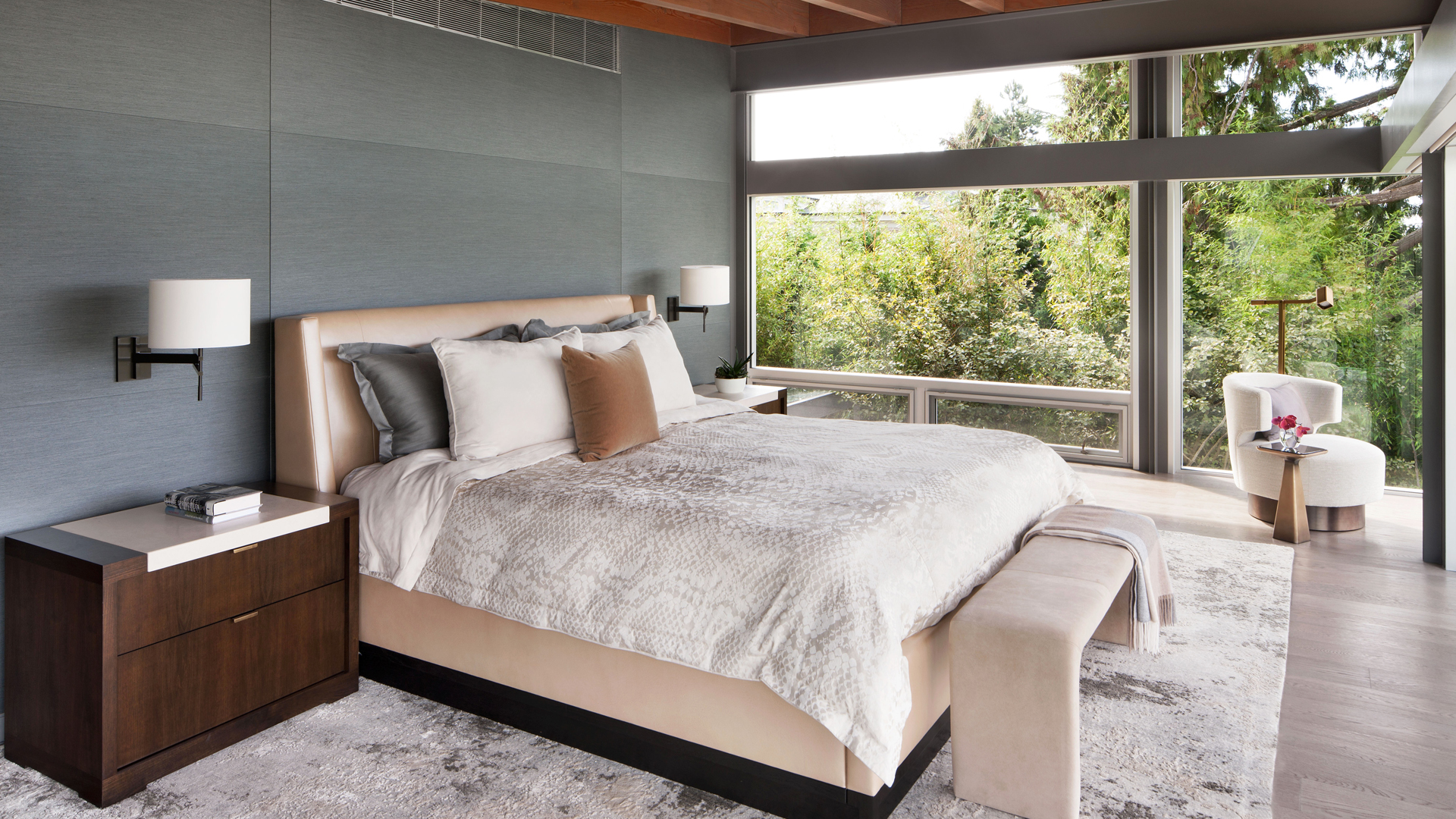
Close your eyes in a well-designed room and you can feel the difference before you hear it. The air is still. Footsteps in the hallway arrive softened, not sharp. A conversation across the kitchen does not ricochet off every surface. Rain on the roof registers as a gentle wash rather than a percussive assault. This is not silence. It is acoustic design, and in luxury homes where comfort, privacy, and sensory quality are taken seriously, it has become one of the most consequential aspects of the architecture.
Acoustic design in luxury homes addresses how sound behaves within and between rooms, how exterior noise is managed at the building envelope, and how the materials, proportions, and mechanical systems of a home contribute to its sonic character. When these elements are considered from the earliest phases of design, the result is a home that feels calm and protected. When they are overlooked, even the most beautiful residence can feel restless, exposed, or fatiguing to inhabit.
Why Acoustics Matter More Than Ever in Residential Design
Several trends in contemporary residential architecture have made acoustic design more important and more challenging. Open floor plans, which connect kitchen, dining, and living areas in a single volume, create expansive, light-filled spaces but also allow sound to travel freely across the entire level. Double-height ceilings and large glass walls, while architecturally dramatic, produce hard, reflective surfaces that amplify reverberation. Concrete, steel, stone, and glass, the preferred materials of modern design, are acoustically hard. They reflect rather than absorb sound energy.
At the same time, homes are being asked to accommodate more activities than ever. A single residence may need to support focused work, remote learning, music practice, media consumption, entertaining, and restful sleep, often simultaneously. The acoustic demands of a home office differ profoundly from those of a media room, a primary bedroom, or an open kitchen during a dinner party. Without deliberate acoustic planning, these competing requirements create friction that no amount of visual beauty can resolve. In our work, balancing openness and privacy in residential design is a challenge that depends as much on acoustic strategy as it does on spatial planning.
Soundproofing Techniques in Custom Residential Construction
Soundproofing is the discipline of preventing sound from passing between spaces. In residential construction, this means controlling transmission through walls, floors, ceilings, doors, windows, and mechanical penetrations. The physics are straightforward: sound travels through any path available, including structural connections, air gaps, ductwork, plumbing chases, and electrical outlets. Effective soundproofing addresses all of these pathways, not just the obvious ones.
Wall and Floor Assemblies
In custom residential work, the most reliable soundproofing techniques begin at the framing stage. Staggered-stud or double-stud wall assemblies decouple the two sides of a wall, breaking the structural path that carries vibration from one room to the next. Adding mass, through multiple layers of gypsum board or specialized high-density panels, increases the wall’s resistance to sound transmission. Resilient channel or sound-isolation clips further decouple the finish layer from the framing, reducing the transfer of impact and airborne noise.
For floor-ceiling assemblies, particularly in multi-level homes, the approach combines mass, decoupling, and absorption. A concrete topping slab on a resilient mat, with acoustic insulation in the joist cavity below, can achieve laboratory-grade sound isolation. Even in wood-frame construction, careful detailing of the floor assembly during the design and documentation phases can produce results that approach the performance of heavy commercial construction, at a fraction of the weight and cost.
Windows, Doors, and Penetrations
A wall is only as sound-resistant as its weakest element. In luxury homes near roadways, flight paths, or active urban environments, the window specification becomes critical. Laminated glass, which incorporates a sound-dampening interlayer between two panes, performs significantly better than standard insulated glazing. Asymmetric glass assemblies, where the inner and outer panes differ in thickness, disrupt the resonant frequency that a uniform assembly would share, reducing the transmission of specific noise bands.
Interior doors present a similar challenge. A hollow-core door, regardless of how well the surrounding wall is constructed, allows sound to pass freely. Solid-core doors with perimeter seals and automatic drop-bottom seals can achieve meaningful isolation between rooms. For dedicated quiet spaces, studio-grade door assemblies with double gasketing and adjustable threshold seals provide a level of acoustic privacy that standard residential doors cannot approach.
Room Acoustics in Open Layouts
Where soundproofing prevents sound from moving between spaces, room acoustics governs how sound behaves within a space. In open layouts, where multiple zones share a continuous volume, the acoustic challenge is particularly complex. Sound generated in the kitchen, the clatter of dishes, the hum of a ventilation hood, the rhythm of conversation, radiates freely into adjacent living and dining areas. Without absorptive surfaces to temper reflections, the cumulative noise level can rise to the point where conversation requires effort and the space feels less comfortable than its visual openness would suggest.
The architectural response involves introducing absorption and diffusion at strategic points within the open volume. Upholstered furnishings, wool rugs on stone or wood floors, curtains and drapery on glass walls, and acoustic plaster or fabric-wrapped panels on ceilings all contribute to controlling reverberation. The key is calibration. A room that is too absorptive feels dead and uncomfortable. A room with too little absorption feels echoey and tiring. The balance depends on the room’s volume, the proportion of hard to soft surfaces, and the activities the space needs to support.
Ceiling treatment is often the most effective and least visually intrusive intervention in open layouts. Research into residential acoustic environments has shown that ceiling surfaces play an outsized role in controlling reverberation because sound naturally rises and reflects off the largest uninterrupted surface in any room. Acoustic plaster applied directly to the ceiling, perforated wood or metal ceiling panels with absorptive backing, and recessed fabric-lined coffers can all reduce reverberation time without compromising the clean lines of a modern interior.
Noise-Reducing Materials and Their Role in Design
Every material in a home has an acoustic signature. Hard surfaces like glass, stone, polished concrete, and metal reflect sound energy with minimal absorption. Soft, porous surfaces like wool, linen, felt, cork, and open-cell acoustic foam absorb sound energy and convert it to a negligible amount of heat. The balance between these two categories determines the acoustic character of any room.
In luxury residential design, the challenge is integrating noise-reducing materials in ways that serve the aesthetic vision rather than working against it. This is where the selection of materials becomes a design discipline rather than an afterthought. A hand-woven wool rug on a honed stone floor is simultaneously a tactile, visual, and acoustic element. Linen drapery on a full-height glass wall softens the room visually, controls glare, and introduces a significant area of sound absorption. Timber ceiling cladding, particularly when installed with an air gap and absorptive backing, reduces reverberation while contributing warmth and texture to the room.
Cork, both as flooring and as wall paneling, provides excellent sound absorption and impact noise reduction with a natural, tactile surface. Felt panels, available in architectural-grade thicknesses and colors, can serve as wall surfaces, pin boards, or acoustic screens in home offices and media rooms. Even the choice of plaster finish matters acoustically. A standard smooth plaster surface reflects sound efficiently, while a textural lime plaster or clay plaster finish introduces microscopic surface variation that can slightly temper high-frequency reflections.
Privacy Through Acoustic Design
Privacy in a home is not only visual. It is fundamentally acoustic. The ability to have a phone conversation in a study without being heard in the hallway, to sleep undisturbed while someone watches a film downstairs, to practice piano in a music room without the sound permeating the entire house: these are the conditions that a holistic design approach makes possible when acoustic privacy is addressed from the start.
Achieving privacy through acoustic design requires a combination of spatial planning, construction technique, and mechanical system design. Rooms that require quiet, such as bedrooms and studies, benefit from being separated from noise sources by buffer zones: closets, hallways, bathrooms, or storage rooms that absorb and attenuate sound before it reaches the occupied space. Back-to-back plumbing walls between a bathroom and a bedroom are a common source of noise complaints that can be avoided entirely through thoughtful floor plan organization.
HVAC systems deserve particular attention. Ductwork can act as a sound conduit, carrying noise from one room to another through the air distribution system. Lined ducts, duct silencers, and properly sized air terminals reduce both the mechanical noise of the system itself and the transfer of sound between rooms via the duct network. In bedrooms, low-velocity diffusers and vibration-isolated equipment ensure that the mechanical system supports restful sleep rather than undermining it.
Quiet Spaces and Retreats
In every home we design, there are rooms whose primary purpose is to offer respite. A reading room tucked behind the library. A meditation space adjacent to the primary suite. A soaking bath positioned at the quietest corner of the home, where the only sounds are water and breath. These quiet spaces and retreats are not incidental. They are planned, positioned, and constructed to achieve a measurable reduction in ambient noise.
The design of a quiet retreat begins with its location within the home. Placing it away from the kitchen, mechanical room, garage, and street-facing walls immediately reduces the acoustic load on the room’s construction. Internal finishes then fine-tune the experience. Soft, absorptive surfaces on walls, floor, and ceiling lower the reverberation time to a point where the room feels enveloping rather than echoey. A well-sealed, solid-core door with a gasket and drop seal completes the enclosure. The result is a room where the noise floor drops perceptibly, and the occupant can feel the difference in their breathing and their focus within moments of entering.
Integrating Audio Technology Discreetly
While much of acoustic design is about managing unwanted sound, luxury homes also require carefully considered systems for delivering wanted sound. Music, film audio, intercom communication, and ambient soundscaping all benefit from integration that is planned during the architectural design rather than retrofitted after construction.
In-wall and in-ceiling speakers, when their locations are coordinated with the framing and electrical plans, can be installed flush with the surrounding surface and finished to match the adjacent plaster or wood. The speaker grille disappears, and the sound appears to emanate from the room itself rather than from a visible device. For dedicated media rooms and spaces where acoustic wellness and sound comfort are priorities, the room’s proportions, surface treatments, and speaker positions are designed together as a single system, ensuring that the acoustic environment supports the technology rather than fighting it.
Distributed audio systems, controlled through home automation, allow different zones of the home to play different sources at different volumes without interference. The infrastructure for these systems, including speaker wiring, network cabling, equipment closet locations, and ceiling blocking for speaker mounting, is most efficiently and invisibly installed during construction. When the architect, interior designer, and audio consultant collaborate from the schematic phase, the technology becomes part of the architecture rather than an addition bolted onto it.
The Acoustic Dimension of Material Selection
In our practice, material selection is never purely visual. Every surface in a home contributes to its acoustic character, and that contribution is evaluated alongside color, texture, durability, and maintenance. A polished concrete floor in a double-height living room will produce a very different sonic experience than a wide-plank oak floor with a wool rug. A floor-to-ceiling glass wall creates a magnificent connection to the landscape but also introduces a large, acoustically reflective surface that may need to be tempered by curtains, furniture placement, or ceiling treatment.
These are not compromises. They are design decisions made with full awareness of their consequences. When a home’s material palette is developed with both sensory and sustainable considerations, the acoustic dimension becomes another layer of the design’s integrity rather than a problem to be solved after the fact.
Designing Acoustic Comfort with an Integrated Team
Garret Cord Werner is a full-service architecture and interior design studio that has been developing custom residential projects since 1996. The firm designs architecture, interiors, and landscape as a single unified vision, which means acoustic considerations, from wall assembly specifications to material selections to HVAC system design, are woven into the project from the earliest phases rather than addressed as an afterthought. The founder’s background in construction provides a rare depth of understanding of how buildings are actually assembled, which is essential for resolving the kind of detailing that acoustic performance demands.
In addition to comprehensive design services, the firm produces custom furnishings, lighting, hand-woven rugs, and curated art, many of which contribute directly to the acoustic character of the spaces they inhabit. If you are planning a home where comfort extends to how the rooms sound and feel, we would welcome the opportunity to discuss what your project could become.


